
Operate
AI Business Automation
Governed agents that carry operational and administrative workflows, with defined decisions reserved for a person.
About AI Business Automation
AI business automation applies governed AI agents to business processes that require a person to read, interpret and decide: intake and triage, document processing, reconciliation, compliance checks, supplier and customer correspondence, and reporting. Because the agent interprets each case, it is designed to handle variation in inputs and the exceptions at which rule-based automation halts. Cases outside the agreed boundaries are routed to a person with the context needed to decide.
The workflow is documented as it is performed in practice, including its exceptions, before any decision is automated. We then agree with the organization which decisions may be automated and which require a person, and the agent is built to that specification. It is evaluated against historical cases before release. Throughput, accuracy and exception rates are measured after release, so that leadership can assess the result in production.
What you receive
- Workflow specification with automation and approval boundaries
- Governed agents in production
- Exception handling and escalation procedures
- Throughput and accuracy reporting
When to engage
Engage when a high-volume workflow is constrained by skilled staff performing repeatable work, and the organization requires control over every automated decision.
AI Business Automation case studies
-
Travel tech
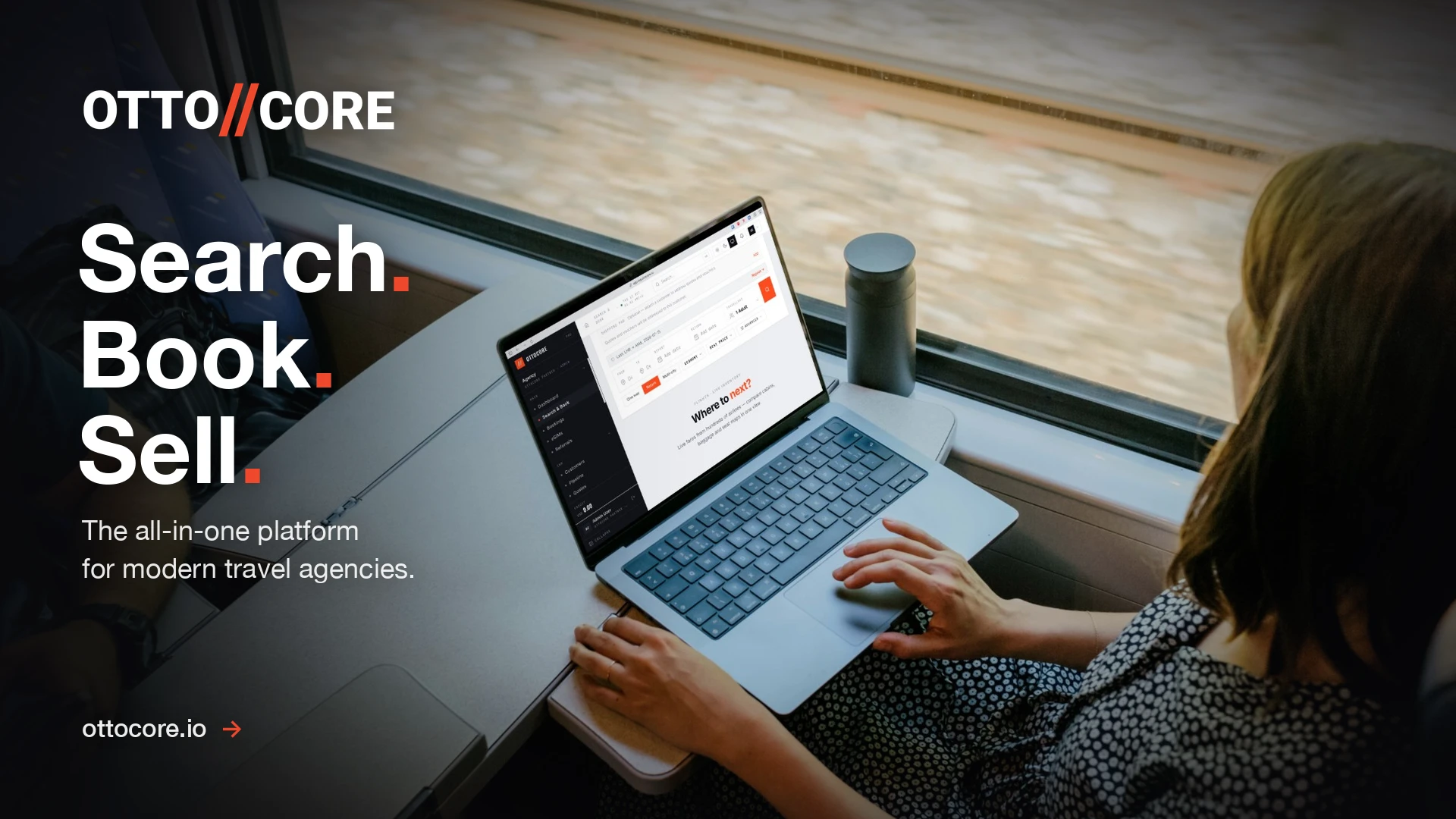
Travel agencies book, get paid and close the month on one platform.
Booking engine, payments, back office and white-label portals for travel agencies, tour operators and corporate travel desks, delivered as one product in eight months.
Read the case study -
Ticketing
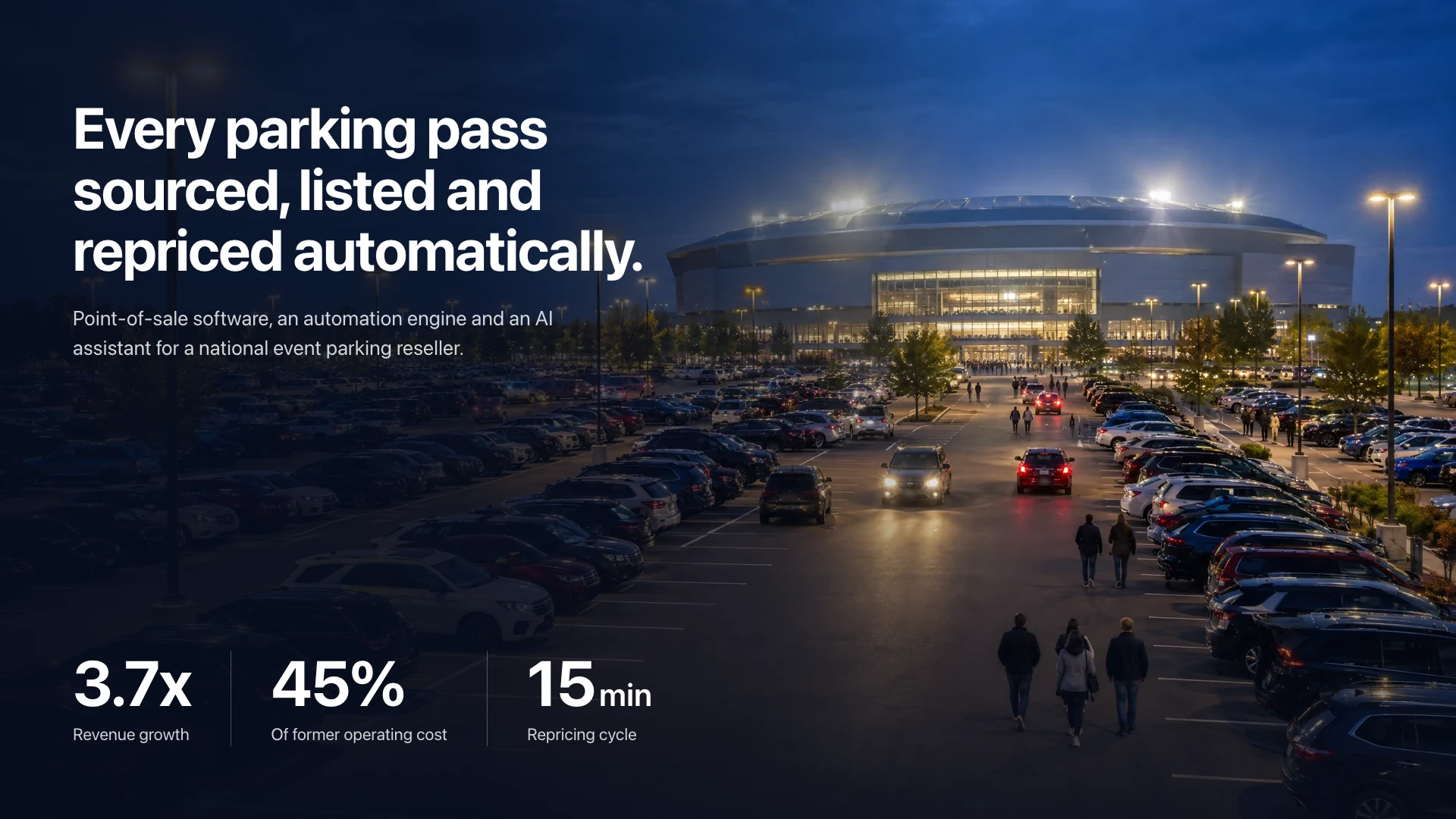
Event parking revenue up 3.7x, at 45% of the former operating cost.
We built and now operate point-of-sale software, an automation engine and an AI recommendation assistant for a national event parking reseller.
Read the case study
Common questions about AI Business Automation
How does AI automation differ from RPA?
Robotic process automation follows fixed rules and halts at the exceptions those rules did not foresee. AI business automation uses governed agents that interpret each case, so they handle variation in inputs and pass genuine exceptions to a person, together with the case details.
Which decisions stay with a person?
That is agreed with your organization before anything is automated. Each decision is classed as automated or reserved for a person, and the agent is built to that specification. Reserved decisions reach a person with the full case attached.
Which processes are suited to AI automation?
The best candidates are high-volume processes in which skilled staff read and judge cases one at a time, where most cases follow a pattern and the exceptions can be defined. A process that must be fully deterministic is usually better served by conventional automation.
More in Operate
-
MLOps
Operations that keep models and agents measurable, reproducible and reversible for as long as they run in production.
-
AI Integration & Implementation
Integration of AI systems into existing enterprise platforms with the security, identity and observability controls those platforms require.
-
Data Science & Analytics
Forecasting, anomaly detection, experimentation and decision analytics that give leadership a quantified basis for operational choices.
Discuss this service on a call.
Describe the objective and the systems it affects, and we will outline how an engagement would proceed.